Integrating 3D Printing with Industry 4.0/5.0
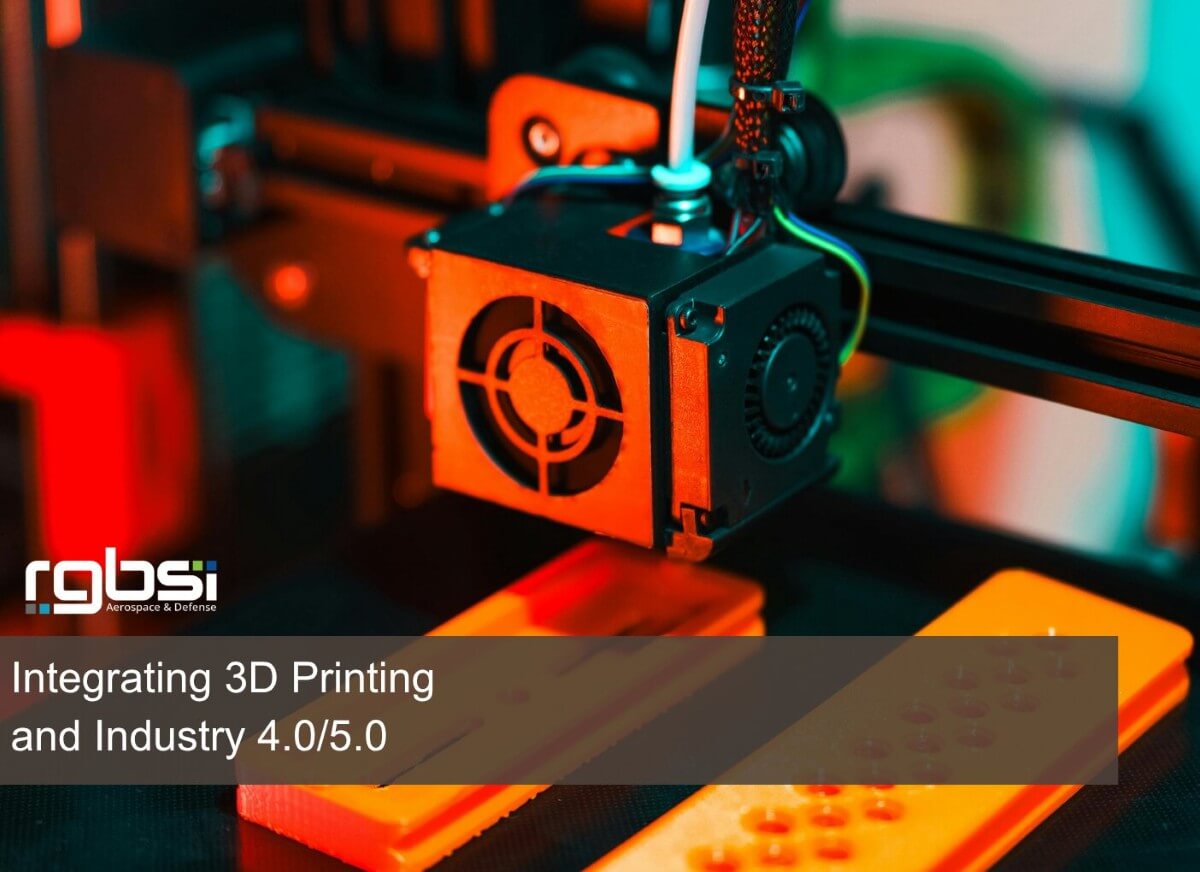
Also known as additive manufacturing, 3D printing builds parts layer by layer from CAD files. Unlike traditional subtractive methods such as CNC machining, which remove material from solid blocks, additive manufacturing enables complex geometries with greater material efficiency.
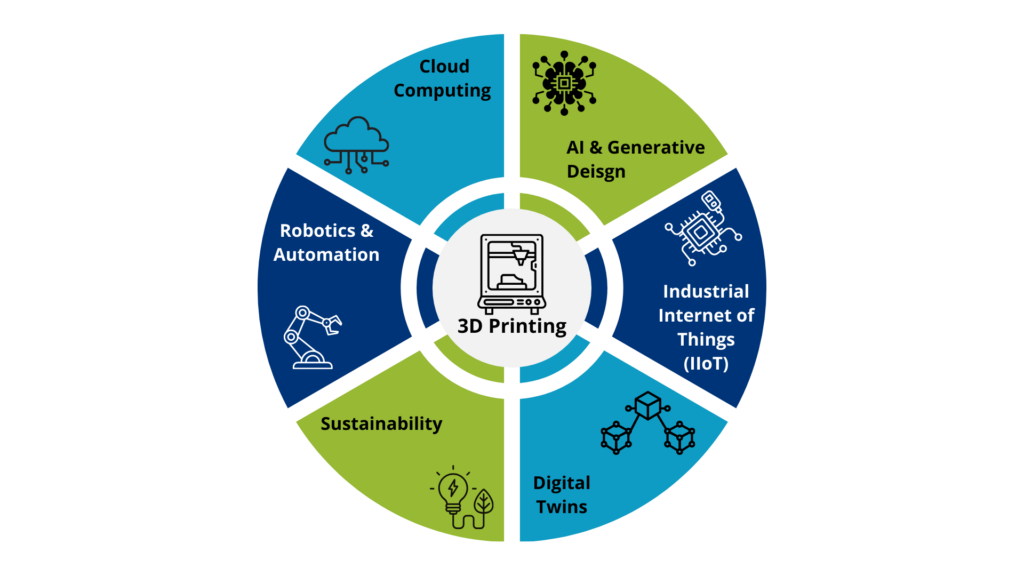
AI driven generative design software optimizes components for strength, weight reduction, and performance. These advanced designs often cannot be produced using conventional manufacturing methods. Aerospace and automotive sectors widely use these capabilities to improve efficiency and reduce material usage.
How Industry 4.0/5.0 Uses 3D Printing
In Industry 4.0/5.0 environments, 3D printing integrates with cloud computing, artificial intelligence, digital twins, and the Industrial Internet of Things. These technologies enable real time monitoring, predictive maintenance, and distributed manufacturing.
Additive manufacturing is widely used in pre production to validate tooling and reduce risk, and it excels in low volume, customized production. As the technology advances, it is moving closer to scalable production capabilities.
3D printing also supports sustainability, localized production, and human centered innovation, strengthening supply chains and collaborative manufacturing.
Why Companies Use Industrial 3D Printing
Industrial 3D printing is ideal for low volume, highly customized parts such as prototypes, tooling, molds, fixtures, and specialty components. It reduces tooling costs, shortens lead times, and increases design flexibility.
Manufacturers may use external 3D printing service providers for limited projects or invest in in house systems when recurring demand and ROI justify the cost. Adoption decisions typically depend on volume, material costs, engineering expertise, and production frequency.